
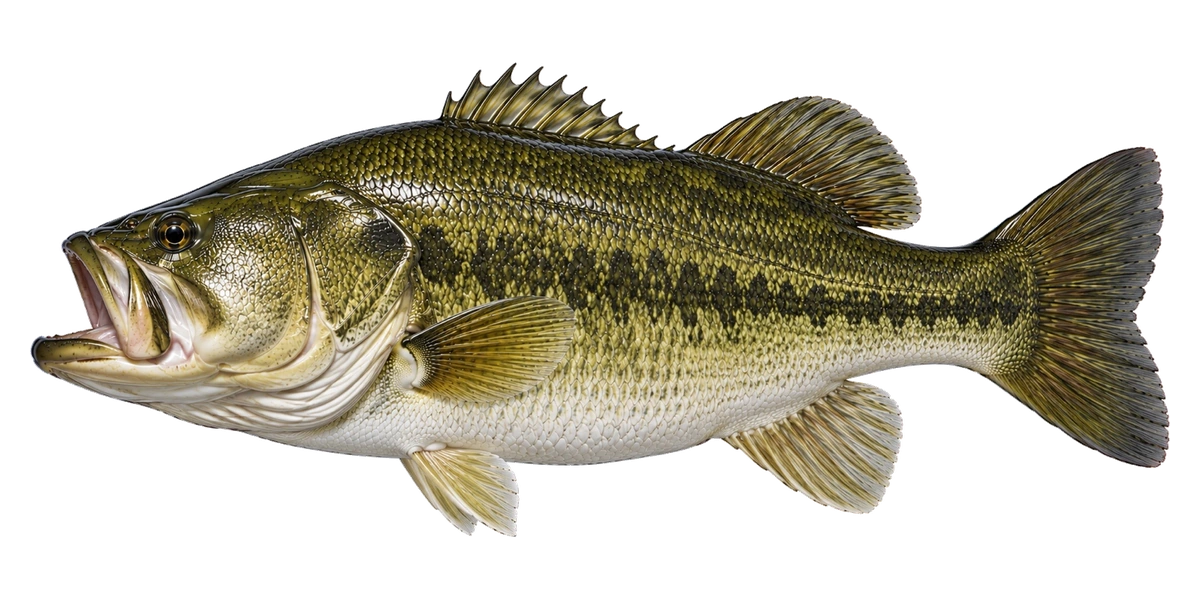
Largemouth Bass
Micropterus nigricansCentrarchidae · Major freshwater sport predator
Largemouth bass are adaptable ambush predators. They use cover, structure, shade, forage concentrations and changes in depth to improve feeding opportunities while staying within usable temperature and oxygen conditions.
Largemouth Bass Records
Official state records and IGFA current All-Tackle world records. These are not necessarily Lake Fork catches.
Start with the clues that concentrate fish
Look here
Do not treat every piece of cover as equal. Isolated cover, edges, shade, nearby depth change and concentrated forage can make one location more useful than another.
Follow the food
The exact prey mix changes by water body, season and fish size. Match the food that is actually abundant where you are fishing.
How to fish for them
Use presentations that can be worked accurately beside or through cover, including soft plastics and jigs.
Use baitfish-imitating presentations such as crankbaits and swimbaits when bass are feeding on moving prey.
Moving baits and topwater presentations can cover water and reach actively feeding fish.
Use presentations that can reach deeper structure or suspended fish instead of assuming all largemouth remain near the bank.
Bass often position where feeding opportunities are concentrated. Baitfish activity, prey concentrations and sonar can be stronger clues than attractive-looking structure by itself.
Vegetation edges, shade lines, drop-offs, points and other transitions can create useful ambush and feeding zones.
A single stump, brush pile, dock post or grass point can create a more distinct ambush opportunity than a long stretch of identical cover.
Largemouth bass use vision while feeding, and shade or reduced light can change how prey and cover are used.
Temperature is not a magic bite number. Usable habitat depends on temperature, dissolved oxygen, forage and cover together.
A few facts that help on the water
Bass are built for ambush
Largemouth bass commonly use vegetation, wood, shade and other structure as feeding cover. These features can shorten attack distance, conceal the predator or concentrate prey.
The mouth helps pull prey inward
High-speed feeding research shows that largemouth bass combine forward motion with rapid mouth and buccal-cavity expansion that creates suction during prey capture.
Find food. Then find the advantage.
Forage, cover, edges, shade, structure, temperature and dissolved oxygen all influence where largemouth can feed effectively. No single piece of cover or single temperature is universally productive.