
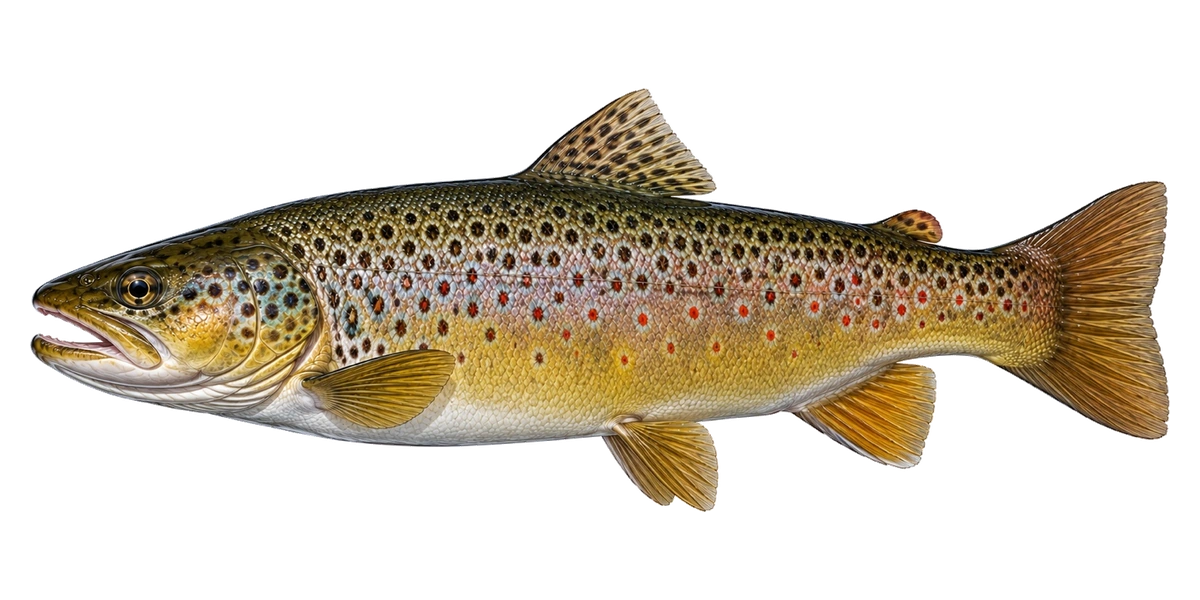
Brown Trout Fishing at Lake Jocassee
Salmo truttaSalmonidae · Introduced coldwater sport predator
Brown Trout are coldwater predators that combine insect feeding with an increasing appetite for fish as they grow. They use cold, oxygenated water, deep pools, undercut banks, cover and low-light conditions, and large fish can become strongly oriented to forage fish.
Start with the clues that concentrate fish
Look here
Start with habitat that combines low-light cover, deep pools and undercut banks, and cold oxygenated water. Exact depth and location remain waterbody-specific.
Follow the food
Opportunistic coldwater predator that often becomes increasingly piscivorous as it grows. Match the food actually present in the waterbody and season you are fishing.
How to fish for them
Insect and nymph imitations.
Small spoons and spinners.
Baitfish-profile lures for larger fish.
Deep trolling and controlled-depth presentations in reservoirs.
Cover and edges can create feeding or refuge advantages, especially where they meet food or a depth change.
Deep pools and undercut banks becomes more useful when it overlaps with food, season, and usable habitat.
Usable habitat depends on the combination of temperature, oxygen, season, and food rather than temperature alone.
Concentrated food can pull Brown Trout into a much smaller part of otherwise similar water.
Tributary mouths becomes more useful when it overlaps with food, season, and usable habitat.
Fast facts worth remembering
- Scientific name
- Salmo trutta
- Family
- Salmonidae
- Feeding style
- opportunistic coldwater predator that often becomes increasingly piscivorous as it grows
- Native range
- Europe, northern Africa and western Asia
- Spawning season
- Fall into early winter in much of the range
Facts that change how you think on the water
A Eurasian fish that became a North American sport classic
Brown Trout are native to Europe, northern Africa and western Asia and were introduced widely in North America beginning in the late 1800s.
Fall is the reproductive season
Brown Trout generally spawn in fall into early winter. Females build shallow redds in clean gravel, deposit eggs and cover them after fertilization.
Low light and cover can matter inside cold water
Brown Trout often use deeper pools, undercut banks, shade and other low-light cover. Cold water alone does not explain where a fish will position.
Big browns become serious fish eaters
Brown Trout eat insects and crayfish, but larger fish often become increasingly piscivorous and can gain substantial growth from a fish-based diet.
A seasonal behavior, not a magic temperature
Brown Trout generally spawn in fall into early winter. Females prepare redds in clean gravel with suitable flow, and exact timing varies with latitude and local water temperature.
Fishing use: As spawning approaches, give clean gravel, tributary movement and nearby coldwater holding areas more attention while respecting local regulations and seasonal closures.
Keep in mind: Use spawning information as a seasonal clue, not as a universal feeding switch.
Three facts that stick
Salmo trutta can express both anadromous and landlocked life histories.
Brown Trout typically spawn October–November, creating a very different seasonal calendar.
Large fish can shift strongly toward a fish-based diet.
Cold water is only the beginning.
Brown Trout need cold, oxygenated water, but the better fishing clue is where that usable water overlaps with cover, low light and real food—especially forage fish for larger trout.